AI Photography for Sporting Goods Brands Spanning Gear and Apparel
Sporting goods spans hard equipment and soft apparel, and no channel publishes a sporting-goods-specific rule, so the general specs bind: Amazon recommends 1,000+ px, Shopify displays 2048 x 2048 px best for square images, and Google Merchant Center caps files at 16 MB and images at 64 megapixels. A 7-image set costs 84 credits.
Last updated:
Key facts
- Amazon recommends 1,000+ px on the longest side against a 500 px minimum, and Amazon.in asks for at least 1001 px.
- Shopify accepts up to 5000 x 5000 px or 25 megapixels under 20 MB and displays 2048 x 2048 px best for square equipment shots.
- Google Merchant Center needs at least 500 x 500 px, recommends around 1500 x 1500 px, and wants the product filling 75% to 90% of the frame.
- Myntra's Fynd integration documentation asks for 1080 x 1440 px or more at a 3:4 aspect ratio and 500 KB to 1 MB, JPEG only, for apparel.
- A mixed catalogue of 25 SKUs at 7 images each is 175 images, or 2,100 credits at 12 credits an image.
- Per-image cost runs from ₹67.86 on the ₹475 Starter pack to ₹37.82 on the ₹24,999 Agency pack, and 4K output costs the same credits as 1K.
Real output from Fluxx.work
Generated from a single uploaded product photo — Fashion & apparel
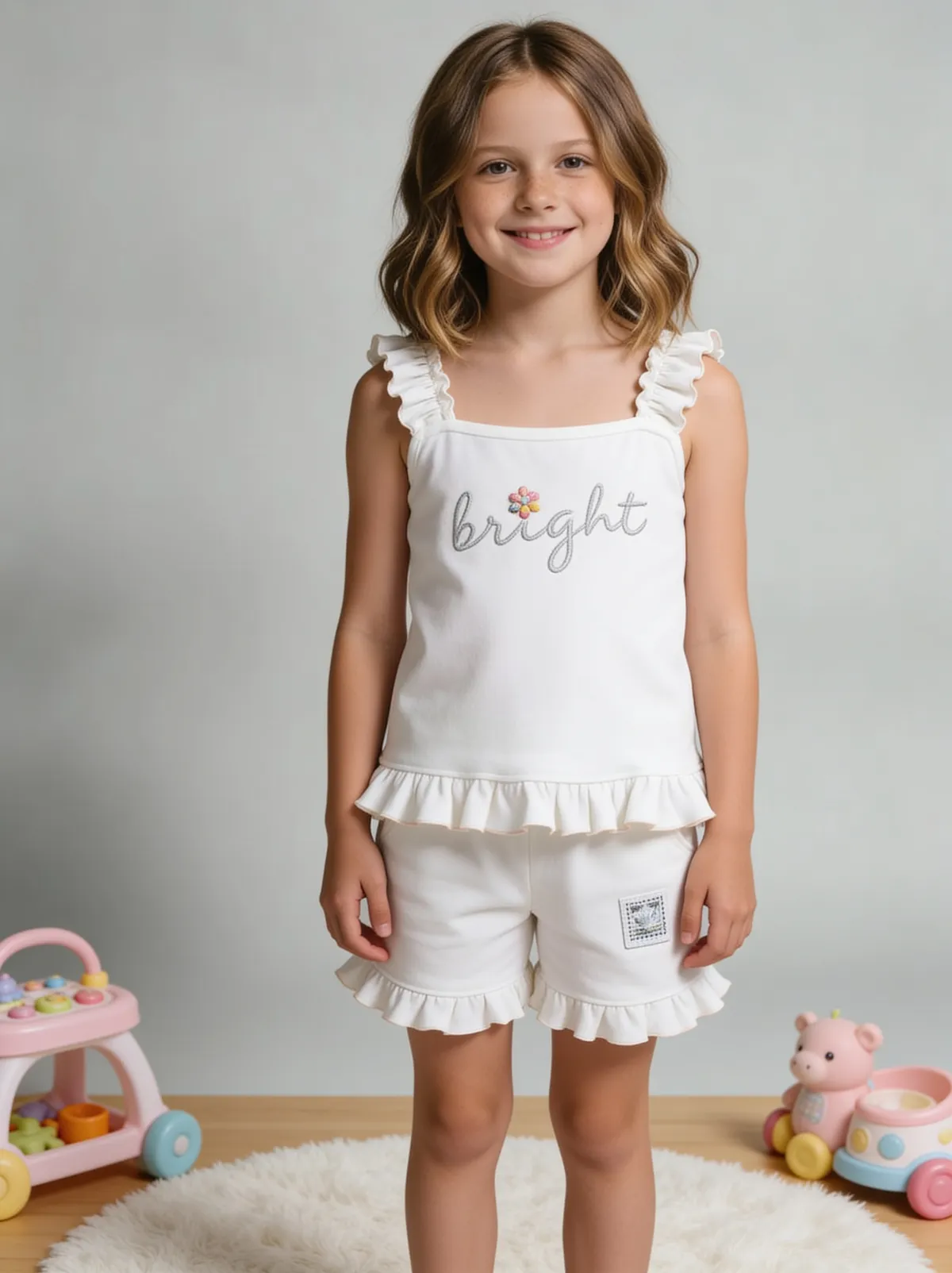
See more examples in the Fluxx.work gallery
Equipment and apparel need different treatment, same brand consistency
A sporting goods catalog might span rigid equipment like bikes or rackets alongside soft apparel like jerseys or leggings, and each category has its own photography conventions. Fluxx.work generates category-appropriate imagery for each — isolated detail shots for equipment, on-body shots for apparel — while keeping the overall brand style consistent so the catalog reads as one line, not two disconnected ones.
Action and lifestyle context drives sporting goods conversion
Buyers in this category want to see gear in use, not just isolated on white — a jacket needs to look functional in the outdoors it's designed for, and equipment needs to look credible in an active setting. Fluxx.work generates that action or lifestyle context directly from the product photo, giving sporting goods brands the in-use imagery that drives conversion without a location shoot for every SKU.
| Channel | Minimum | Recommended | Cap or note |
|---|---|---|---|
| Amazon US | 500 px on the longest side | 1,000+ px enables zoom | 10,000 px maximum |
| Amazon India | At least 1001 px on the longest side | Product at least 85% of the image area | 10,000 px maximum |
| Shopify | No minimum published | 2048 x 2048 px for square images | 5000 x 5000 px or 25 megapixels, under 20 MB |
| Google Merchant Center | 500 x 500 px | Around 1500 x 1500 px | 16 MB and 64 megapixels; product fill 75% to 90% |
| Meta catalogue | 500 x 500 px | 1024 x 1024 px | 8 MB maximum; JPEG or PNG |
| Myntra (Fynd integration docs, secondary) | 1080 x 1440 px or more | 3:4 aspect ratio at 72 dpi or more | 500 KB to 1 MB, JPEG only |
Benefits
Category-appropriate imagery for both equipment and apparel
Action and lifestyle context without a location shoot per SKU
One consistent brand style across a mixed product catalog
Faster turnaround for seasonal gear and apparel launches
How It Works
1
Upload photos of equipment and apparel items.
2
Choose category-appropriate presentation styles.
3
Generate consistent, in-use imagery across the catalog.
Best Practices
- check_circleMatch presentation style to category — detail shots for equipment, on-body for apparel
- check_circlePrioritize action or in-use context for hero SKUs to drive conversion
- check_circleKeep one consistent brand style across every category in the catalog
Common Mistakes
- cancelUsing the same flat presentation style for both equipment and apparel, ignoring category norms
- cancelSkipping in-use or action context, leaving gear looking static and uninspiring
- cancelInconsistent brand style between the equipment and apparel sides of the catalog
Trusted by 1,200+ businesses worldwide
“We used to book a studio every quarter. Now one product photo gives us the hero, lifestyle and detail shots in a single pass, and the catalogue finally looks like one brand instead of six separate shoots.”
Marcus T.
Founder, Home Goods Brand · Austin, TX
“The garment is genuinely the same in every frame — colour, print and trims all hold. That was the part I did not believe until we ran our own SKUs through it.”
Dana R.
Head of Ecommerce, Activewear · Brooklyn, NY
“Glass and reflections are where most tools fall apart. Ours come out clean, so we can photograph a new scent the week it launches instead of waiting on a studio slot.”
Layla A.
Founder, Fragrance Brand · Dubai, UAE
“Metal finish and stone detail survive a zoom now, which is what our listings actually needed. We stopped reshooting pieces that came back soft.”
Omar S.
Marketing Director, Jewellery · Abu Dhabi, UAE
“The textures and lighting are so realistic that customers tell us they can almost feel the product. We reshoot far less than we used to.”
Sneha P.
Founder, Coffee Brand · Coorg, India
“The AI-contextual backgrounds just work. It reads the product and picks the right aesthetic. We've stopped paying for stock photo subscriptions.”
Priya S.
Founder, Skincare Brand · Mumbai, India
Frequently Asked Questions
Does any channel have a sporting-goods image rule?
No. Equipment and apparel are covered by the same channel-wide specs, so Amazon's 500 px minimum and 85% product fill, Shopify's 25 megapixel and 20 MB ceiling, and Google's 64 MP and 16 MB caps all apply.
How many credits does a mixed equipment-and-apparel catalogue need?
A 25-SKU catalogue at 7 images each is 175 images or 2,100 credits at 12 credits an image, and scene recreation for action context is 15 credits an image.
What aspect ratio does Myntra want for sports apparel?
Myntra's Fynd integration documentation, a secondary source rather than Myntra's own site, asks for 1080 x 1440 px or more, a 3:4 aspect ratio, 72 dpi or more, JPEG only, and a 500 KB to 1 MB file.
How much does it cost to put gear into an outdoor action scene?
Scene recreation is 15 credits an image, so 40 in-use shots cost 600 credits, while background removal for a clean catalogue shot is 2 credits.
What is the smallest paid pack for a first sports catalogue?
The ₹475 Starter pack holds 95 credits and 7 images at ₹67.86 an image, and the ₹999 Growth pack holds 222 credits and 18 images at ₹55.50 an image; signup includes 1 free image (12 credits).
Why Fluxx.work
Sporting goods catalogs mix categories that traditionally need separate shoots, and Fluxx.work brings them under one consistent, in-use visual style.